The WhitePaper Reading Club [22] 15 Oct 2024
ERC 7683 Cross Chain Intents & UniChain Shawn (Stargate)
Summary
Uniswap Protocol is onchain amm dex that is experimenting with infra redesigns aiming to improve UX
Why This Is Important
Improvements on various aspects of UX helps bring in orderflow from a product angle. From a user perspective, such improvements aim to generate stickiness to the product, helping Uniswap cement itself as one of the best onchain amm dexes in the industry.
Overview
Protocol, Interface, Labs
To begin, we should make clear the distinctions between the different areas of "Uniswap", some of which may confuse new users.
Uniswap Labs: The company which developed the Uniswap protocol, along with the web interface.
The Uniswap Protocol: A suite of persistent, non-upgradable smart contracts that together create an automated market maker, a protocol that facilitates peer-to-peer market making and swapping of ERC-20 tokens on the Ethereum blockchain.
The Uniswap Interface: A web interface that allows for easy interaction with the Uniswap protocol. The interface is only one of many ways one may interact with the Uniswap protocol.
Uniswap Governance: A governance system for governing the Uniswap Protocol, enabled by the UNI token.
Background
(i) Traditional onchain amms are often targets for a multitude of MEV attacks. It is estimated that almost half of all the trading activity on Uniswap V2 comes from MEV bots while for V3, we can see some of the high liquidity pools with a vast majority of their transactions composed by MEV bots. Such pools are usdt-usdc (70% MEV bot) and link-weth (80% MEV bot). It is vital that Uniswap works on reducing toxic flows to these LPs to exchange onchain trading experience.
Uniswap aims to minimize such negative impacts by working on various suites of products such as Uniswap X (intent based) after which it has launched Unichain, aiming to internalize MEV.
ERC 7683 - Uniswap Labs and Across propose a new standard for cross-chain intents, establishing a unified framework for intents-based systems to specify cross-chain actions. With the proposal for the new standard, Uniswap Labs and Across have jointly published an Ethereum Request for Comment to the Ethereum Magicians forum. The two projects have proposed the standard to the CAKE Working Group for their discussion and review.
Conceptual Components of ERC 7683
Problems: Many different protocols working on intents with their own preferential standards and configurations, leading to further liquidity fragmentation and competing standards which slows down Ethereum’s development.
Solution: Unifying standards between intent based protocols
| MEV | Maximal extractable value, popularly known as MEV, refers to the maximum value miners or network validators can extract by rearranging and reordering transactions waiting to be added to the blockchain.Front Running Attack: A front-running attack occurs when transactions are rearranged, placing the attacker's transaction before the target transaction. This attack can be utilized to extract profits or execute smart contract calls to accomplish specific objectives.The malicious actor intentionally assigns a higher gas price to their tran saction, effectively offering a form of incentive to miners. This higher gas fee is aimed at persuading miners to prioritize their transaction over the -original one in a block. Despite the drawback of reducing the attacker's profit margin, this higher gas price is a crucial aspect of the front-running strategy. It elevates the likelihood that their transaction will be processed before the original, ensuring the success of the front-running attack.Back Running Attack: Backrunning is a technique where an attacker places their malicious transaction after the victim transaction gets executed. An attacker can accomplish this by lowering the gas price of the malicious transaction. This will make sure that the victim transaction is prioritized over the backrun transaction. Real example is explained in the Sandwich Attack section.Sandwich Attack: When an individual identifies a favorable situation to sandwich a transaction, they execute a trade ahead of the transaction (referred to as "frontrunning") and subsequently follow it with a trade after the transaction (referred to as "backrunning"). This strategy is employed to influence the price of the trade.Due to the inherent structure of Automated Market Makers (AMM) like Uniswap, these executed trades are tactically designed to manipulate the asset prices, creating a potential avenue for financial gains.Instances of these extractions commonly occur when users engage in swaps on decentralized exchanges (DEX). DEXs operate using automated market makers employing specific formulas to establish token prices in relation to others. This computational process relies on the token supply within a liquidity pool, providing an opportunity for MEV bots to derive significant value from specific trades.Arbitrage: Decentralized exchanges may list different prices for the same tokens due to different levels of demand. A wide price discrepancy may be an opportunity for MEV extraction. Bots can exploit these situations by buying tokens at a lower price at one exchange, turning around, and selling them on a second exchange at a higher rate. JIT liquidity Attack: Uniswap is currently the most liquid Decentralized Exchange (DEX) on Ethereum. In May 2021, it upgraded to the third protocol version named Uniswap V3. The key feature update is “concentrated liquidity”, which supports liquidity provision within custom price ranges. However, this design introduces a new type of Miner Extractable Value (MEV) source called Just-in-Time (JIT) liquidity attack, where the adversary mints and burns a liquidity position right before and after a sizable swap |
|---|---|
| Intents | An ‘intent’ refers to the specific goal or objective that a user aims to accomplish within the blockchain ecosystem. It is an expression of the individual’s desired end state(s). Generally, a transaction explicitly refers to ‘how’ an action should be performed, while an intent refers to ‘what’ the desired outcome of that action should be.For example, if a transaction says ‘do A then B, pay exactly C to get X back’, an intent says ‘I want X and I’m willing to pay up to C’. Users submit their intent to a service, which then delegates the task to a ‘solver’ — who can be a person, an AI bot, or another protocol or intent-centric system — to carry out the necessary actions to fulfill the intent.The difference is that, until recently, users have completed these actions and all individual steps on how to execute them — like choosing on which platform to execute the trade, and at what time and rate — by themselves. The aim with intent is that users merely state their goal and leave the ‘how’ up to the solver. Instead of focusing on the step-by-step processes involved in blockchain transactions, an intent-centric approach prioritizes understanding the desired outcomes or goals of users. This approach aims to simplify blockchain interactions, making them more intuitive and user-centric. |
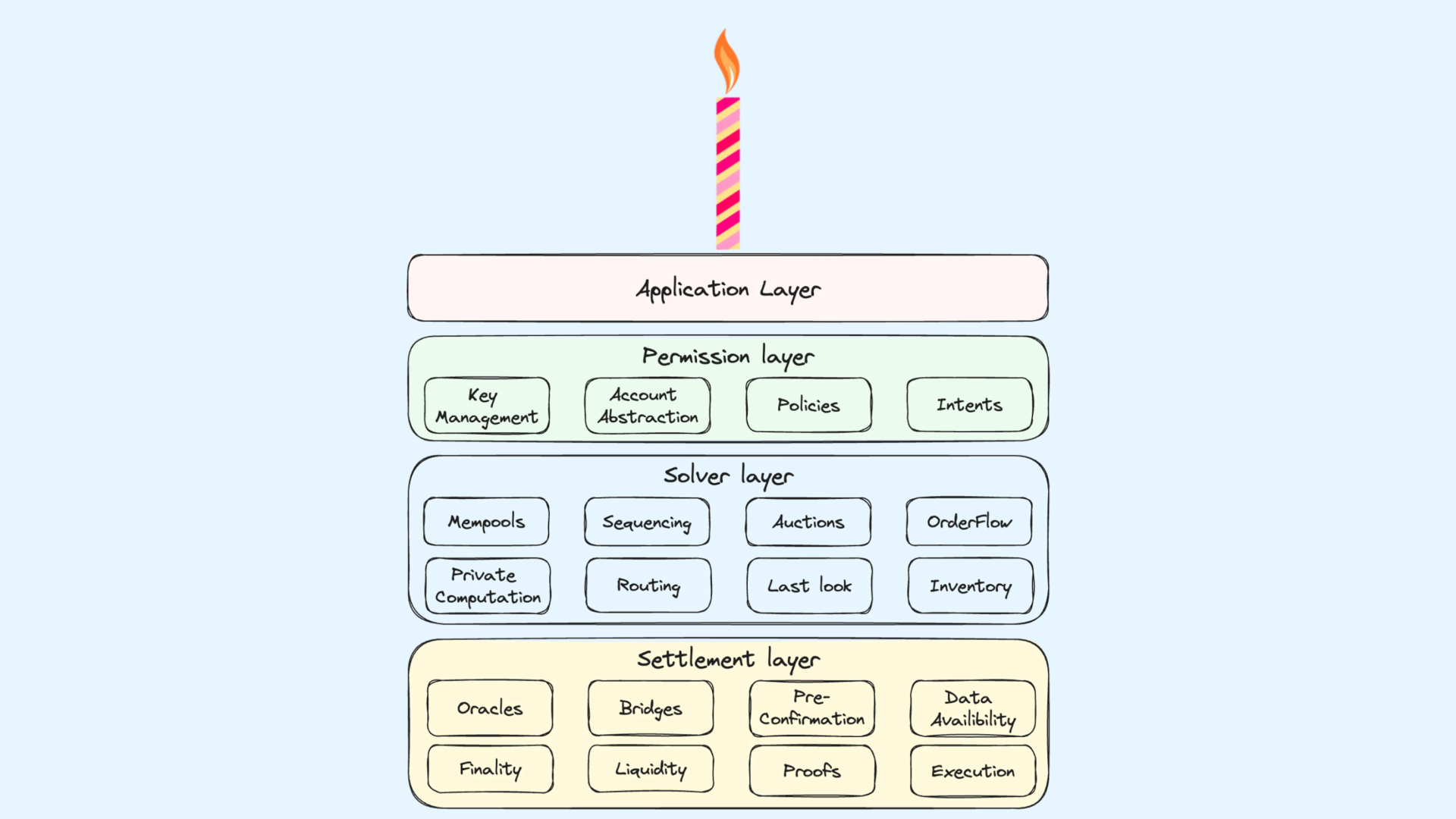
| Cake working group | There have been several independent efforts to develop and introduce standards which would improve interoperability, developer experience, and user experience. These include Account Abstraction (EIP-4337), Smart Wallets (ERC-7579, ERC-7555 ERC-6900), Intents (ERC-7521), Cross-chain (xERC20).Although each of these efforts are worthwhile in their own right, we believe researchers and developers alike would benefit from forming a shared perspective of interaction across the stack and a consensus view on the requirements for message passing standardization between components.As such, we are introducing the Chain Abstraction Working Group to host discussions and workshops regarding research and standardization across all slices of the CAKE.https://frontier.tech/cake-working-group |
Conceptual Components of Unichain
Problems: Ethereum has low scalability and malicious MEV while traditional Rollups have single sequencers leading to problems with decentralization. Public mempool leads to sophisticated MEV extraction while MEV distributio n tends to be imbalance.
Solution: Unichain fea. Verifiable block building and validation network for faster state updates, enabling apps to extract and internalize MEV while providing faster settlements and finality.
| Op Superchain | Collective of L2s sharing revenue and working on interoperability via shared sequencing tech.Interoperability Explainer: Interoperability is the ability for a blockchain to securely read the state of another blockchain. Native OP Stack interoperability provides the ability to read messages and transfer assets across the Superchain (without having to go through L1) via secure message passing. This results in the following benefits: fungible and portable assets and liquidity, lower fees and lower latency, less fragmentation across the Superchain, improved user experience for developers on the Superchain, secure transfer of ETH and ERC-20s across L2sSecure Message Passing: Superchain interop includes both the protocol layer message passing and the Superchain ERC20 token specification.Message passing protocol: the initial + finalizing/executing message that fire events to be consumed by the chains in the dependency set. SuperchainERC20 token specification: the SuperchainERC20 turns message passing into asset transfer between chains in the interop set. This means ETH and ERC-20s can seamlessly and securely move across L2s, and intent-based protocols (i.e., bridges) can build better experiences on top of the message passing protocol. |
|---|---|
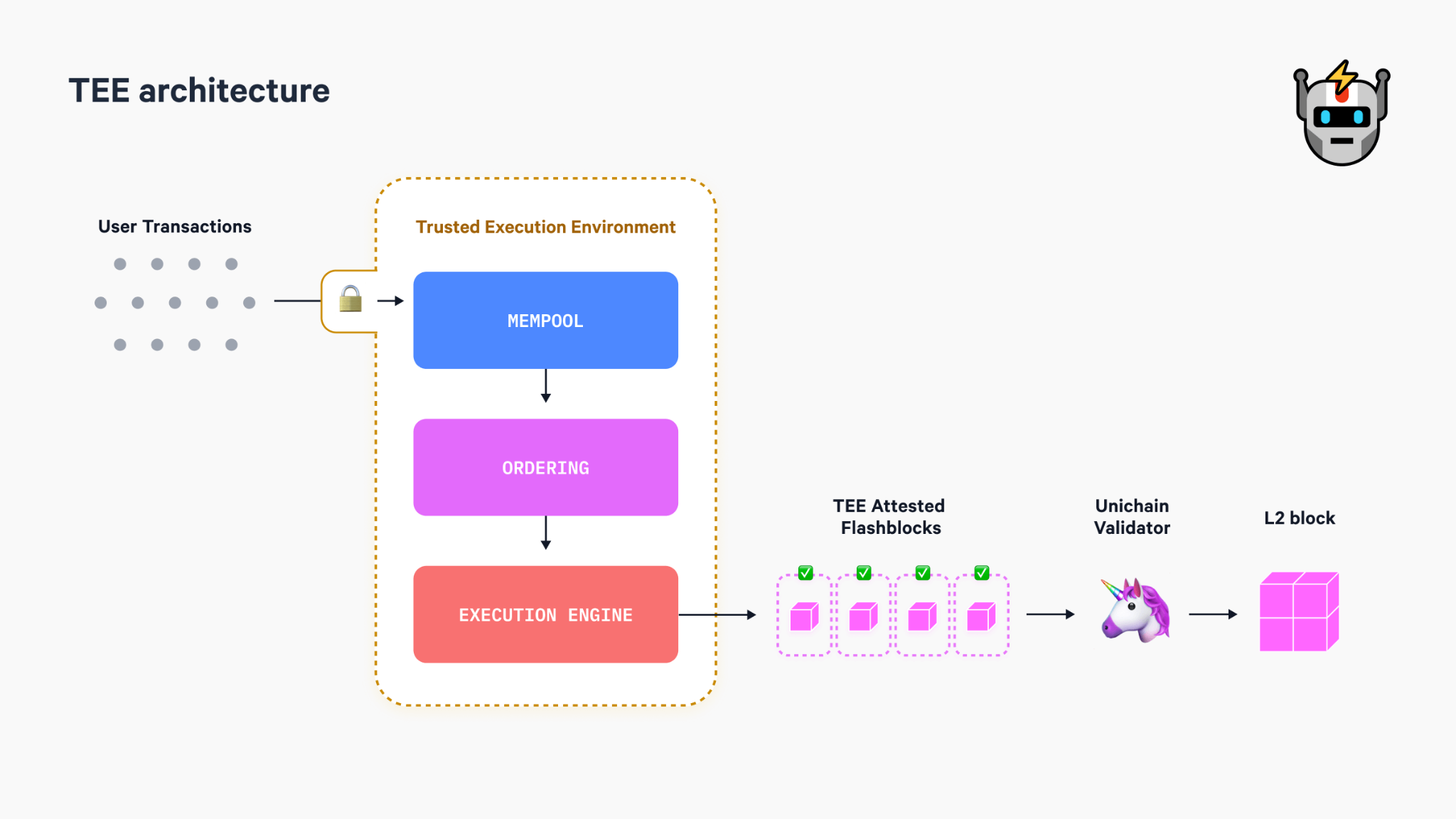
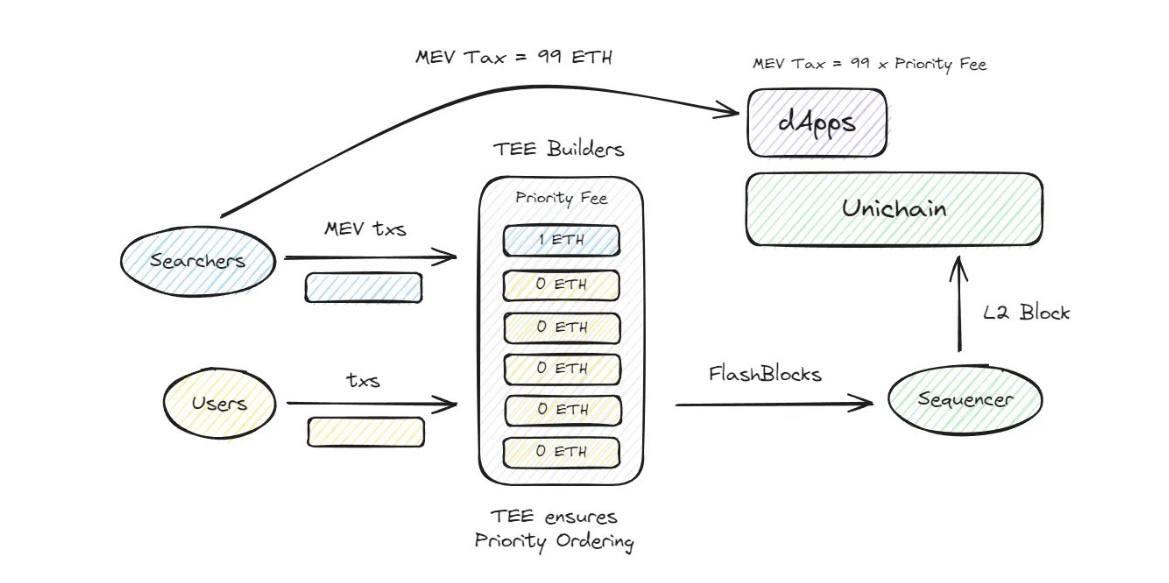
| Rollup - Boost | Rollup - Boost functions as a sidecar software, a feature developed in collaboration with Flashbots, offering 2 key functionalities;Flashblocks: Splits a single block into 4 parts, with each partial block being created every 250ms, allowing faster state updates and mitigating malicious MEV.2. Verifiable Priority Ordering: (i) Priority Ordering + TEE Builder & Sequencer Separation, (ii) Priority Ordering is a block-building mechanism that assumes that block proposers order tx solely based on priority fee and do not engage in censoring or delaying actions; viable only when there is a single trusted block proposer. (iii) Priority Ordering allows dApps on mainnet to impose MEV tax on tx interacting with them, enabling extraction of a portion of MEV value. The MEV tax is a fee imposed by smart contract on tx, which can be set as a function of the tx’s priority fee. |
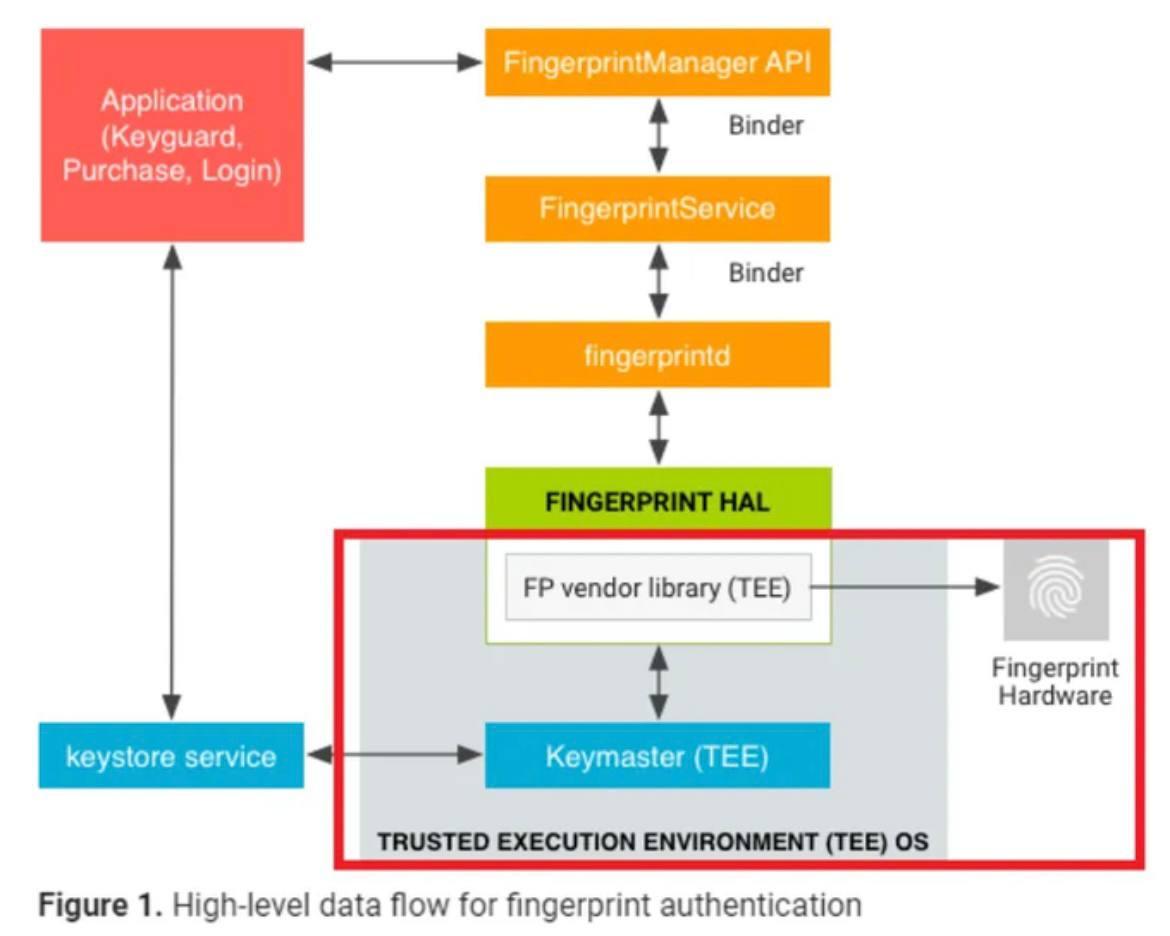
| TEE and TEE Builder | TEEs ensure that trusted code can run securely. Attestation processes are used to ensure the code running in the TEE is trustworthy. (ii) Unichain’s block building process takes place within the TEE builders' Trusted Execution Environment (TEE). (iii) Thanks to the properties of TEE, builders can initially submit an attestation to prove to users that they are utilizing the Priority Ordering block-building mechanism. (iv) This combination of features ensures that applications on Unichain can reliably extract a portion of the MEV revenue. |
| Unichain Validation Network | The Unichain Validation Network is a decentralized network of node operators responsible for validating the latest state of Unichain and providing fast finality, enabling seamless cross-chain transactions through economic security. |
Questions
Ryan Teo (GSD Management):
This is my understanding:
Unichain chose the OP Stack superchain camp as layer 2 instead of layer 3 application chain.
Any reasons why Unichain did not choose the more advanced L3 application chain? Was there maturity and stability concerns?
Regina: How is MEV taxation ensured for fair usage without creating other unintended consequences? Eg: exploitations. I’m trying to understand its effectiveness against curbing MEV attacks.
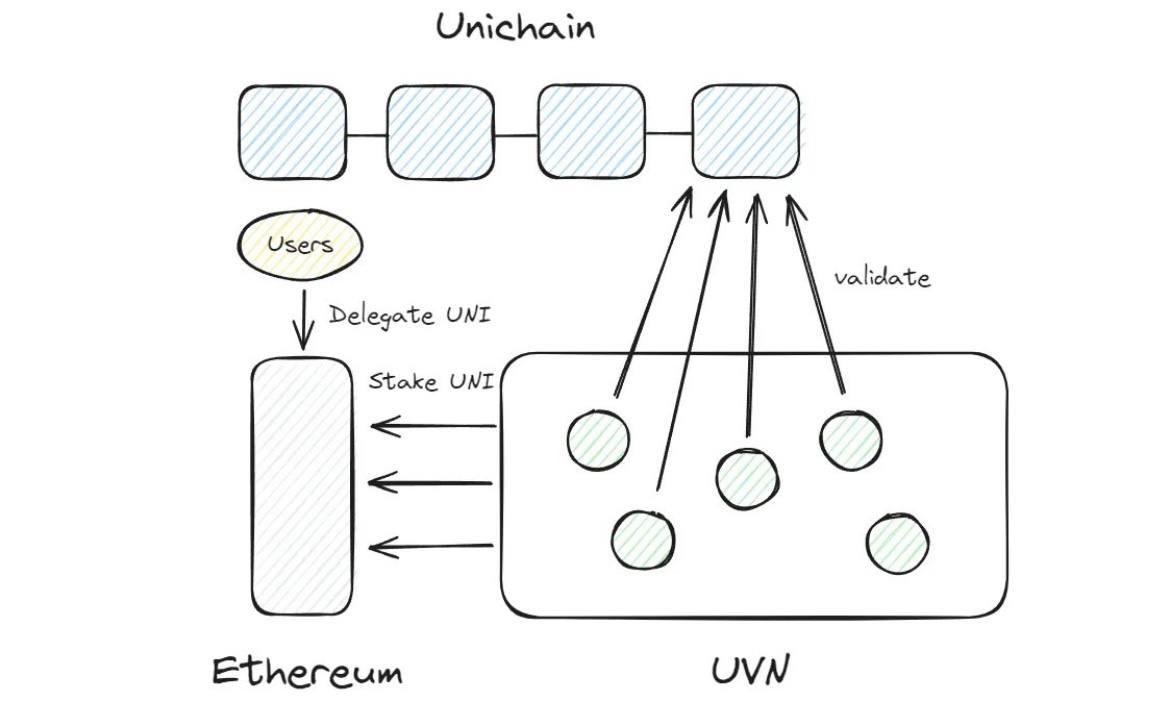
Rongxin: Who are the unichain validators? Does it matter who runs the TEE?
Notes, It looks like they want to achieve, fast blocktimes, low MEV and ordering attacks and interoperability across EthChains