The WhitePaper Reading Club Singapore [21]
Rethinking Crypto’s Values (Vitalik’s Blogs) 11 Sep 2024
Why does all of this matter? A look at history and where we are going Dustin (Eth65), Rongxin (WPRC) [....]
Summary
The crypto world may have strayed from its original vision of decentralization and freedom, but new technologies like zero-knowledge proofs offer hope for returning to these values and building a better, more open internet.
Why This Is Important
Web3, Crypto and Blockchain technology is one of the most important technology revolutions of our times. It’s critical we understand our history, why we are in this space and where the spend out energy.
Overview
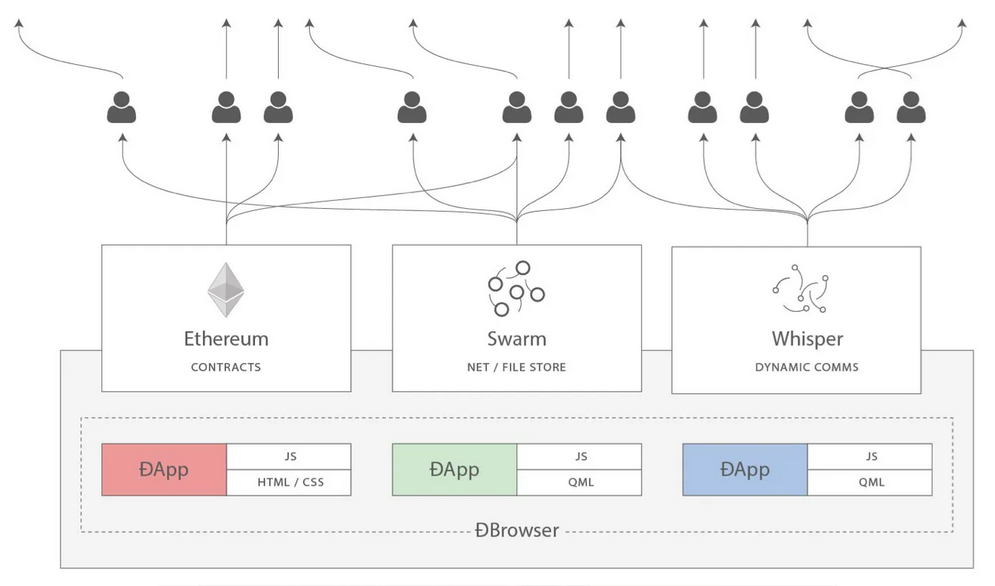
The articles reflect on the early cypherpunk vision of Bitcoin and Ethereum, showing how both have strayed from their roots due to issues like high fees, over-financialization, and governance conflicts, such as the 2010s Bitcoin block size war. Vitalik examines these events to assess crypto’s future, concerned that today’s DeFi is far from the original ideals of decentralization and freedom. Gavin Wood’s vision of Web3 included not just smart contracts but also decentralized communication and storage systems like Whisper and Swarm/IPFS. Despite the focus on governance splits, Vitalik remains optimistic that technologies like zero-knowledge (ZK) proofs will help overcome these challenges, bringing crypto back to its core values and driving a more decentralized future. “The ultimate diffuser of political tension is not compromise, but rather new technology: the discovery of fundamentally new approaches that give both sides more of what they want at the same time.” - Vitalik
Background
Big Block Wars: A technical argument during 2015-2017 between 2 major Bitcoin camps on whether to increase BTC block size (from 1MB as introduced by Satoshi) or not, and if so by how much. The 2 camps are 1) Pro-small-block and 2) Pro-large-block. (ii) Small blocks allow more nodes to be run as equipment to mine small blocks is less expensive, thereby favoring decentralization. On the other hand, large blocks keep Bitcoin decentralized by making sure users can continue to afford on-chain transactions as each block could contain more data. (iii) In the end, the pro-small-block camp “wins” the war, which was concluded with Bitcoin's block size limit remaining at 1MB and the agreement to implement SegWit. However, the pro-big-block camp went on to hard fork BTC, resulting in the creation of Bitcoin Cash with an 8 MB block size.
It’s an excellent case study on disagreement between cryptocurrency communities (the first major cryptocurrency culture war), how it is resolved, and the ramification that is felt by every cryptocurrency community even years later.
Team
(i) Vitalik Buterin – Co-founder of Ethereum, reflecting on crypto’s past to guide its future. (ii) Gavin Wood – Ethereum co-founder who coined the term “Web3” and envisioned decentralized communication and storage systems. Founder of Polkadot (iii) Jonathan Bier – Author of The Blocksize War,Chief Investment Officer @farsideUK, Board Member @bitcoinbrink,Venture Partner @CadenzaVentures (iv) Roger Ver – Bitcoin Jesus and co-author of Hijacking Bitcoin, supporting the pro-big block viewpoint. (v) Peter Todd – Bitcoin developer who supported the pro-small block side to maintain decentralization. (vi) Joerg Platzer – Owner of Room 77, a Berlin restaurant that was a hub for Bitcoin payments and the cypherpunk community. (vii) Craig Wright – Controversial figure who falsely claimed to be Bitcoin’s creator, Satoshi Nakamoto, and was supported by some big blockers.
Opinions
While these are merely blog posts, it emphasizes where Vitalik may personally spend his time and efforts.
Conceptual Components
| Bitcoin Block Size War | Gavin Wood’s early diagram on “web3” components. Ethereum originally had 3 components: Ethereum (Contracts), Swarm (File Storage) and Whisper (Communication Protocol). However, our focus mostly have been on Ethereum. |
|---|---|
| Waku (Whisper Protocol) | (waku.org) Waku is a decentralized messaging protocol enabling private, secure communication without central intermediaries. It supports human, machine, and hybrid communications, designed for low-resource devices and scalable for millions of users. Waku ensures privacy, censorship resistance, and efficient messaging across platforms, with innovations like sharding and rate limiting to prevent network overload and attacks. Importance: Waku provides a secure, decentralized communication system essential for dApps, countering the dominance of centralized tech platforms while ensuring scalability and privacy for all users.Waku Relay: The main part of the Waku network that handles peer-to-peer messaging, ensuring privacy and security. It uses a pub/sub (publish-subscribe) method to send messages. Waku Filter: A simpler version of Waku Relay, designed for low-power devices, allowing them to only receive the messages they need from full nodes. Waku Store: Allows devices that were offline to get messages they missed when they reconnect. Waku Light Push: A system for devices with short connections or limited data to send messages to the network efficiently. |
| Swarm | Swarm is a decentralized, peer-to-peer network that offers censorship-resistant storage and communication services. Its goal is to create a self-sustaining system for decentralized data storage using smart contracts and the xBZZ token for incentives.Swarm operates in four main parts: (1) Underlay Network: Connects nodes using a peer-to-peer protocol, ensuring secure and encrypted connections. (2) Overlay Network: Distributes data chunks across nodes using a distributed hash table (DHT), tamper-proof, and redundant storage. (3) Data Access Layer: Simple APIs for developers to interact with Swarm’s storage system, making it easy to upload, download, and search data. (4) Application Layer: Provides guidelines for building decentralized applications on Swarm. Swarm ensures decentralized, scalable, and fault-tolerant data storage for developers building decentralized applications. |
Values Described in Blog Post
(i) Open participation: Anyone can join as a user, observer, or developer without restrictions. (ii) Decentralization: Apps should function independently of any single entity, even if core developers leave. (iii) Censorship resistance: No central authority should block users or apps; bad actors are handled at higher levels. (iv) Auditability: Anyone can verify an app’s code and operations for transparency. (iv) Credible neutrality: Infrastructure should be neutral and visibly unbiased to all. (v) Building tools, not empires: Tools should integrate openly with the broader ecosystem, not trap users. (vi) Cooperative mindset: Projects should collaborate on shared resources and aim for mutual benefit, even when competing.
Examples of where new tech that improved things for everyone
| BLS Signatures | BLS signature aggregation offers a practical solution to improve signature verification for sharding and Casper, addressing bottlenecks in Ethereum’s scalability. In the short term, BLS can reduce verification time by combining multiple signatures into a single check, enhancing efficiency without compromising security. Long-term, STARKs can replace BLS to provide quantum security. BLS allows faster Casper finality and crosslinking, and it could enable the addition of more shards while maintaining performance. Why This Matters: This approach improves Ethereum’s scalability by handling a large number of validators more efficiently, ensuring secure, decentralized processes as the network grows. [REF 2] |
|---|---|
| EIP-7702 | EIP-7702 introduces a new transaction type that allows users to set code for externally owned accounts (EOAs). This enhances the flexibility of EOAs, enabling features like transaction batching (multiple actions in one transaction), sponsorship (letting someone else pay transaction fees), and privilege management (limiting certain permissions for sub-keys). This proposal focuses on improving usability and security without turning EOAs into full smart contracts. It also ensures compatibility with future Ethereum updates, like account abstraction.Why it matters: EIP-7702 allows EOAs to perform more complex tasks, like executing multiple actions in a single transaction and enabling others to sponsor transactions, making Ethereum more user-friendly and versatile. [REF 3] |
| Multidimensional gas pricing | Ethereum traditionally used a single “gas” system to measure computational effort for transactions, which merges multiple types of resources (like computation, storage, and data). However, this one-size-fits-all model can lead to inefficiencies, especially as the network grows. To address this, Ethereum is moving toward a multidimensional gas system that charges different resources (e.g., data, storage) separately, improving scalability and reducing costs for rollups and stateless clients. The new approach allows for more efficient handling of data-intensive and computation-heavy transactions, and offers better safety limits, optimizing Ethereum’s performance without compromising security.Why it matters: By using multidimensional gas, Ethereum can handle more transactions, reduce fees, and improve scalability, especially for rollups and future stateless clients. This approach separates the costs for different types of operations, leading to better efficiency and long-term sustainability for the network. [REF 4] |
Questions
-
There are recent examples of schisms within the Ethereum community, between Dapp developers, core developers and researchers which can be traced to tradeoffs between the values mentioned, Open Global Participation, Decentralization, Censorship Resistance, Audit-ability, Credible neutrality, Building tools not empires, Cooperative mindset
-
Topic: Conflicts of interests in Core Developers and Overloading Ethereum’s Consensus [Decentralization, Credible Neutrality, Cooperative Mindset]
-
Eigen Layer provides Data Availability as a service which ostensibly competes with native Ethereum Layer 1’s Data Availability (Drake and Dankrad’s area of research), which represents a problematic conflict of interest
-
A counterpoint is that Eigen Layer will exist anyway, and could cause problems to Ethereum without good advice (), and Justin and Dankrad are some of the best place to provide that advice
-
Ethereum's research direction running on collision course with implementation and DevOps [Decentralization, Open Global Participation, Censorship Resistance, Credible Neutrality, Cooperative Mindset]
-
Peter Szilágyi (core developer, Geth) has expressed grave concerns about PeerDAS, MEV, liquid restaking, the centralization of block building
-
A deeply principled developer in the trenches of DevOps at the execution level, his cleared eyed criticism of Ethereum’s direction is a critical voice from the inside
-
One theme of his criticism is Ethereum researchers collaborating with external parties with vested interests and direct conflicts of interest
-
Smart contract wallet developers/ ERC 4337 team / EIP 3074 authors [Decentralization, Censorship Resistance, Credible Neutrality, Cooperative Mindset] engaged in a long debate on Account Abstraction Mafia chat when EIP 3074 was considered for inclusion for the Pectra upgrade
-
There are concerns about Ethereum Layer 2s acquiring much of the share of users from Ethereum L1. With much of core protocol development in upgrades delivering significant savings on L2 fees (EIP-4844, EIP-7594 aka PeerDAS), L2s are the main beneficiaries of user adoption and revenue from transaction sequencing fees. The tension is the lack of inherent economic incentives for L2s currently using centralized sequencers to transition to based shared sequencing.
-
Based sequencing | Inclusion Lists | Enshrined Proposer Builder Separation | Preconfirmations | Execution Tickets | Multiple Concurrent Proposers are all efforts to improve Decentralization, Censorship Resistance and Credible Neutrality
-
The net effect of Ethereum’s attempts to ossify the L1 and push innovation to L2s means that there are aspects of the Core Values Vitalik refers to which used to be handled in the soft-consensus circles of core devs, Ethereum Magicians, and other Open Source forums with a measure of “Ethereum Alignment”. As some of these implementation details start to push out to L2s, it exposes such implementation details and agendas into the realm of certain tensions and factors such as
-
Conflicts of Interest
-
EIP authors, Ethereum core developers and/or researchers working or advising companies in their personal capacity where design choices in Ethereum’s roadmap can confer an advantage or disadvantage a competitor
-
Economics Incentives of VC backed/Publicly listed companies having seats at the table of Ethereum’s roadmap
-
How opinionated should the Ethereum L1 be with the rollup centric roadmap?
-
Vanilla based sequencing: retaking control of sequencing from the L2s?
-
Inclusion lists