| The WhitePaper Reading Club Singapore - SMU Blockchain Club | 10 Dec 2024 |
|---|---|
| Prediction Markets | |
| Seeing the future, or just another degen casino? |
Summary
Users buy/sell shares of future events, with prices between $0 to $1, where “YES” and “NO” shares are backed by $1 in collateral.
Why This Is Important
Prediction markets often outperform pundits by synthesizing diverse information into a single probability, offering real-time, unbiased, and accurate forecasts of important events, as demonstrated by recent U.S. presidential elections.
Key Innovation
Prediction markets introduce a decentralized mechanism for price discovery of future events by creating a financial incentive structure that rewards accurate forecasting, while solving the oracle problem through automated market makers and dispute resolution systems.
Overview
Prediction markets are specialized exchanges where users trade outcome shares of future events, with prices reflecting the market's collective probability estimate. These markets leverage Automated Market Maker (AMM) protocols to provide constant liquidity and enable efficient price discovery. Modern implementations typically use a Constant Function Market Maker (CFMM) design where the total supply of YES and NO shares always equals the collateral pool. The market price represents the probability-weighted expectation of the outcome, making these platforms powerful forecasting tools that can aggregate distributed information from many participants into a single price signal.
Background
- (2015-2019): (i) Augur launched as the first major decentralized prediction market platform on Ethereum (ii) Introduced novel mechanisms for decentralized oracle systems using $REP (the Augur token) token holders (iii) Gnosis developed alternative market maker mechanisms (iv) Key challenge was high gas fees and slow resolution times
- (2020-2024): (i) Polymarket brought hybrid solutions combining on-chain settlement with off-chain order matching (ii) Kalshi became the first Commodity Futures Trading Commission (CTFC) - regulated event contracts exchange (iii) Development of scalable Layer 2 solutions reducing transaction costs
Prediction Markets have some fundamental concepts:
- Oracle Problem: The challenge of reliably determining real-world outcomes in a decentralized way. Prediction markets need robust oracle systems to settle markets accurately and resist manipulation.
- Automated Market Makers (AMMs): Smart contracts that provide continuous liquidity through mathematical formulas rather than traditional order books. In prediction markets, they ensure constant availability of shares at algorithmically determined prices.
- Information Aggregation: The economic theory behind how markets can efficiently combine diverse pieces of private information held by different participants into a single price that reflects the collective wisdom.
- Market Resolution: The process of determining the final outcome of a prediction market, often involving multi-stage dispute mechanisms and economic incentives to ensure accurate reporting.
Team
There are currently several major players in this space, notably Polymarket and Khalshi as well as new entrants that use novel approaches. (i) Shane Koplan (Polymarket): Born 1998 and NYU grad, went to build polymarket in 2020 inspired by ideas around Futarchy.
(ii) Tarek Mansour (Khalshi), attended high school in Lebanon, earned a degree in CS and Math from MIT and worked as a trader at Goldman Sachs and Citadel.
(iii) Luana Lopes Lara (Khalshi), CTO and was a professional ballet dancer before earning a CS degree and a MS in Reinforcement Learning at MIT, and worked at Bridgewater and Citadel as quants.
(iv) Robin Hanson (Futarchy) Prof at George Mason University who pioneered prediction markets. Prev Ph.D. in social science from the California Institute of Technology, and influential research on how markets can aggregate info.
(v) Joey Krug (Founders Fund) co-founded Augur and served as Co-Chief Investment Officer at Pantera Capital.
Components
(Key Innovations - focus on the innovations, and key parts)
| Augur | Augur, a decentralized prediction market platform built on the Ethereum blockchain, was founded in 2014 by Joey Krug and Jack Peterson. |
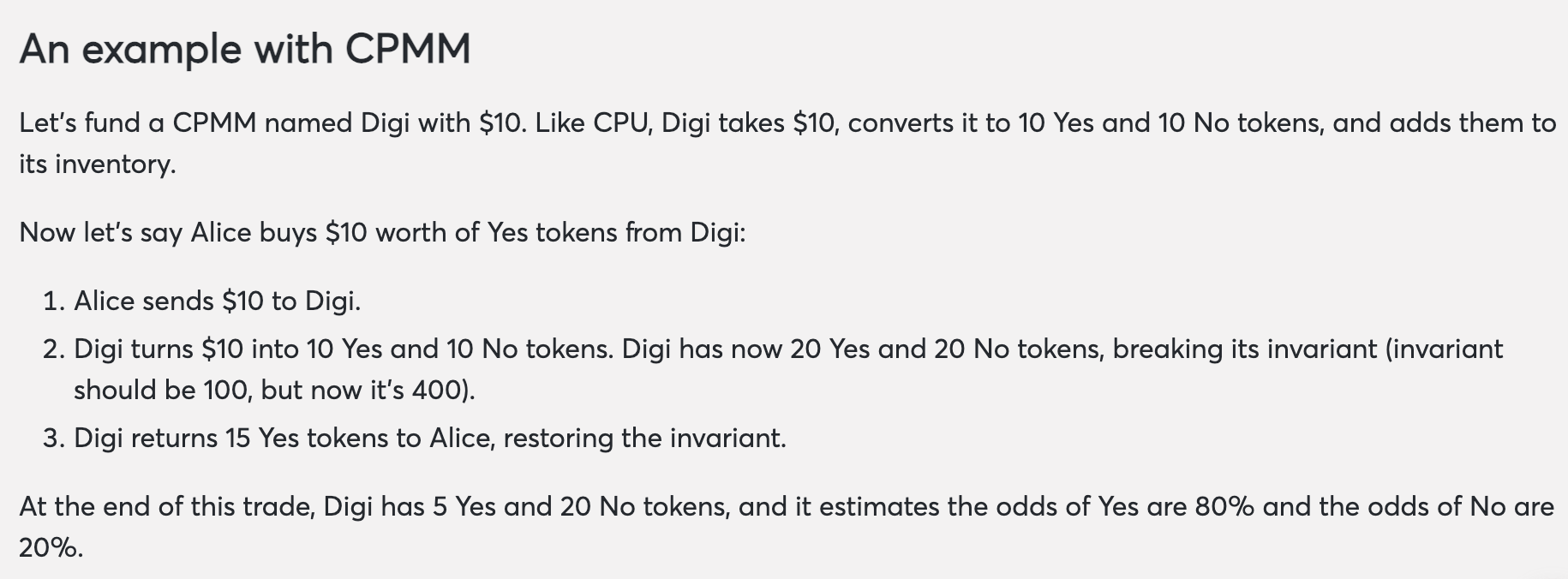
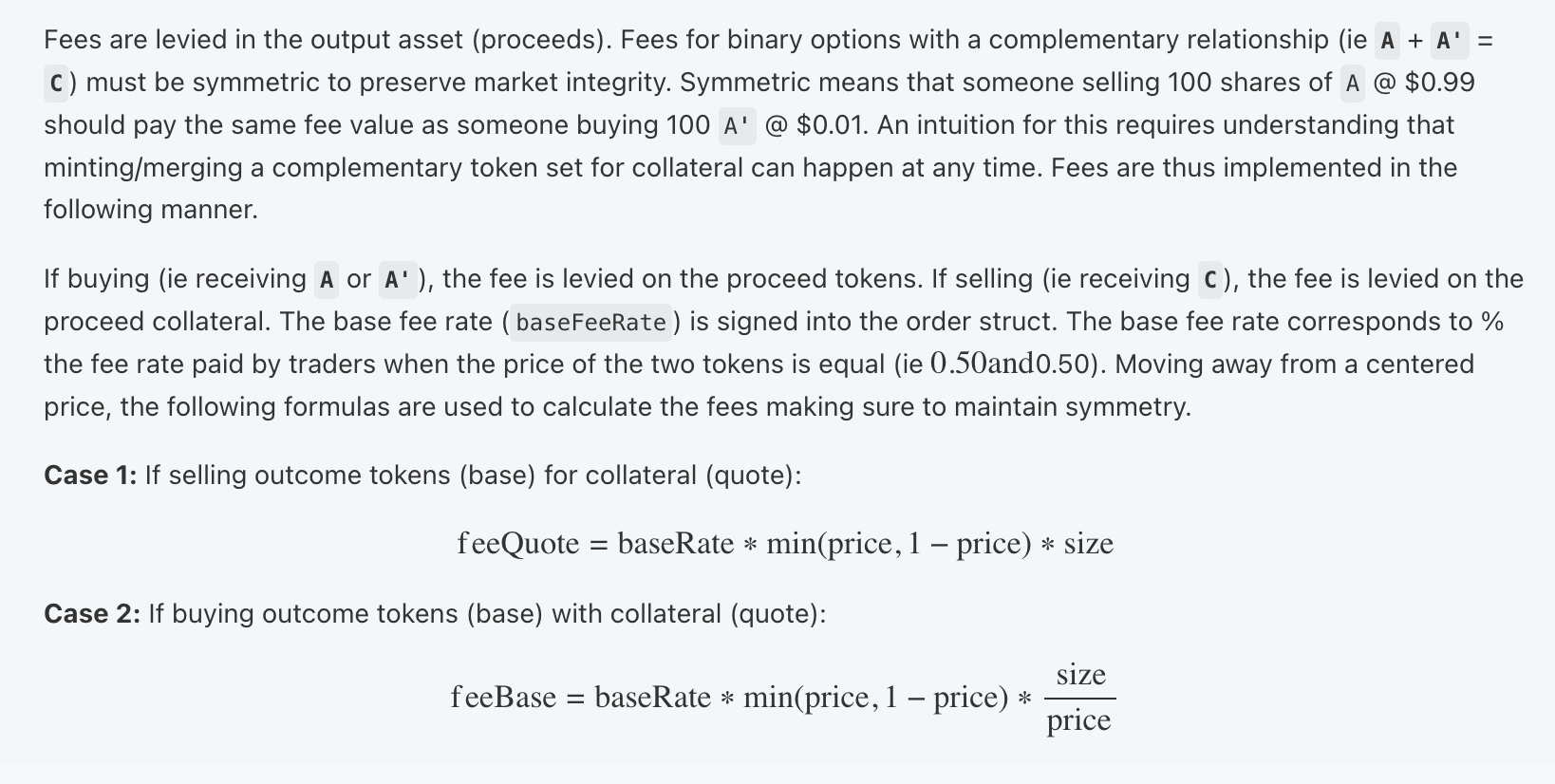
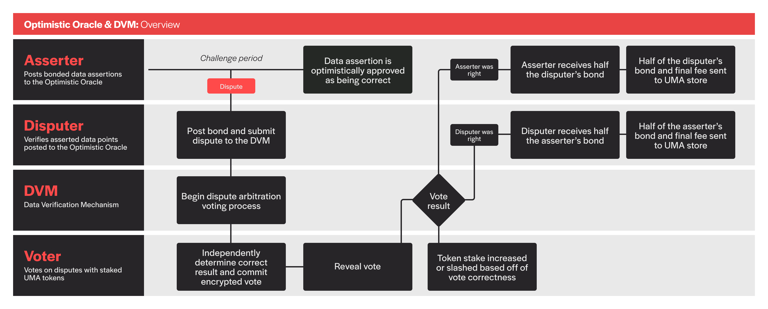
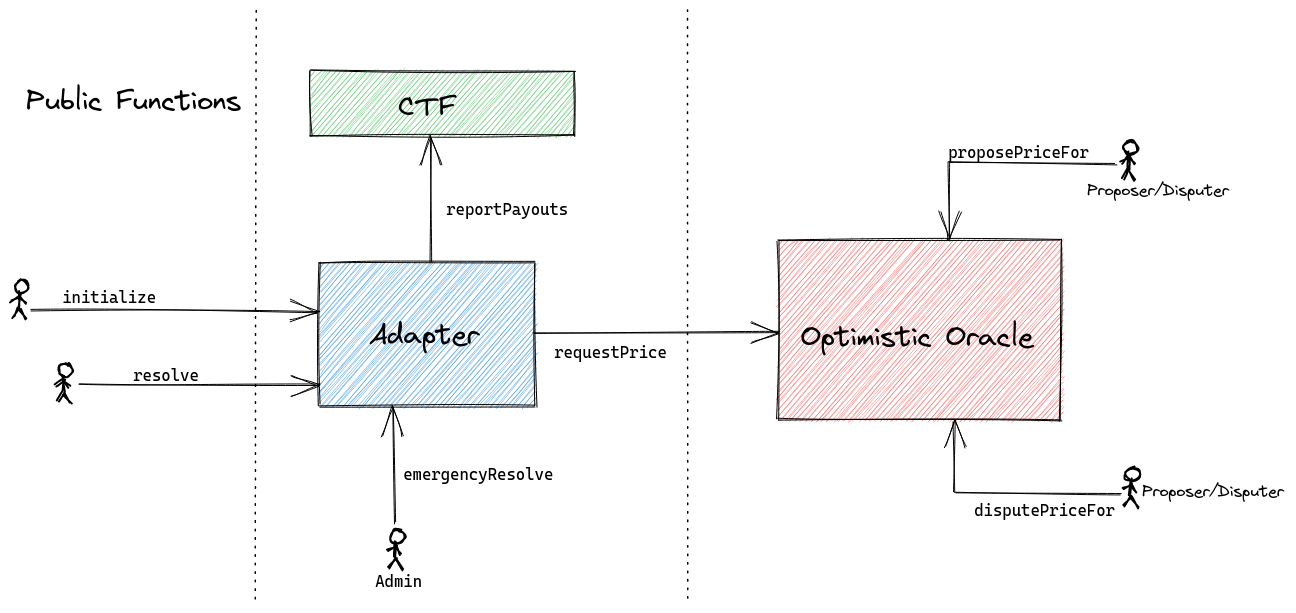
| --- | --- | | Polymarket | Polymarket leverages on Gnosis Conditional Token Framework (CTF) for tokenizing event outcomes. Founded in 2020 by Shayne Koplan.CTF :Binary outcomes (“YES” and “NO”) are implemented as ERC155 tokens. These tokens are related to a parent condition backed by some collateral.At any time, after a condition has been prepared on the CTF contract, it is possible to “split” collateral into 1 YES unit and 1 NO unit.At any time, after a condition has been prepared on the CTF contract, the reverse can happen. 1 YES unit and 1 NO unit can be merged to a collateral unit.Once a condition has had its payout reported, the users with shares in the winning outcome can redeem them for the underlying collateral.A polymarket prediction market can be in 2 forms: Central Limit Order Book (CLOB):Off-chain matching, on-chain settlement.Underlying exchange contract facilitates atomic swaps between binary outcome tokens and collateral assets according to signed limit orders.Exchange contract allows for matching operations that include a mint/merge operation which allows orders for complementary outcome tokens to be crossed.Fees on CLOB for binary options with a complementary relationship must be symmetric.Fixed Product Market Makers (FPMM):Also known as Constant Product Market Maker (CPMM) used by Uniswap and Balancer pools.Implement a fixed product scoring rule wherein the product of the tokens in the pool is held constant and by maintaining this invariant. The tokens in the pool are outcome shares.When users trade against the pool, they pay a configured fee.Limited activity, most liquidity is on the order-bookUser Experience (UX) 1-of-1 multisig:Proxy wallet to manage all the user’s position (ERC1155) and USDC (ERC20).Improves UX where multi-step transaction can be executed atomically and transactions can be relayed by relayers on the gas station networkAllows the transfer of ownership to a new address | | UMA OO | This is the oracle system that PolyMarket uses: https://uma.xyz. Founded in 2018 by Hart Lambur and Allison Lu, a team drawing from backgrounds in trading and financial engineering.UMA Optimistic Oracle (OO) is an optimistic oracle, which verifies data quickly.. An asserter will post a bonded assertion regarding an external state. If a party thinks it is incorrect, the party (disputer) can refute within the dispute period. The UMA DVM (Data verification mechanism) will resolve the disputes via voting based on $UMA holders.UMA Optimistic Oracle Flow:Asserter will post a bonded assertion about the state of the worldDisputers can refute a piece of data submitted by an Asserter within the assertion liveness period by referencing their own data sources.If Disputers do not refute the price submitted by the Asserter within the proposal liveness period, the assertion is optimistically treated as being correct.If an assertion is disputed, the assertion will be submitted to UMA’s Data Verification Mechanism (DVM) for dispute arbitration.UMA DVN FlowProposes a vote to UMA tokenholders to report the price of the asset at a specific timestamp.Vote concludes after a certain voting periodUMA tokenholders reference the price identifier UMA Improvement Proposals to arrive at a vote result Data Verification Mechanism aggregates votes from tokenholders to determine the price at a given timestampPolymarket UMA flowWho use UMA OO: Sherlock (Audit), Polymarket Hats.finance (Bounty Protocol) | | PM AMM | Current climate on pm-AMM (prediction market for Automated Market Maker) in production: Fixed Product Market Maker (FPMM)Problems of designing PM AMM:Liquidity providers in PM are essentially guaranteed to lose all of their value once the prediction market expiresPrediction markets have different price dynamics due to their bounded pay offs and finite horizons.The volatility of outcome tokens in PM depends on the current probability of the event and time until expiration, leading to inconsistent liquidity provisioned by pool.Latest research of PM on AMM utilising Gaussian score dynamics to model after price processes of some outcome tokens. This model is based on some underlying random walk above some value at a particular future expiration time. Written by Ciamac Moallemi and Dan Robinson | | Futarchy (Usecase of Prediction Markets in Policy) | Overview: Futarchy, a governance structure proposed by Robin Hanson, combines democratic voting on values with prediction markets for policy selection. It operates on the principle of "vote on values, bet on beliefs." In this system, the community votes on overarching goals, such as GDP growth or environmental sustainability, and then utilises prediction markets to evaluate which policies are most likely to achieve those goals. The market prices reflect aggregated beliefs about the likelihood of success, and policies with the highest market confidence are implemented.Key Innovation / Idea: Futarchy builds on the efficiency of prediction markets as tools for information aggregation. By creating financial incentives for accurate forecasting, Futarchy ensures that decisions are guided by those with the most reliable knowledge, rather than by political biases or uninformed majorities. This model addresses inefficiencies in traditional governance by leveraging the Efficient Market Hypothesis (EMH), which states that market prices incorporate all available information. TLDR, a basic way to think about futarchy is:When proposals are raised to a DAO, people speculate on whether the proposal would make the DAO's token go upWhen the market thinks that the proposal would increase the value of the token, the proposal passesWhen the market thinks that the proposal would decrease the value of the token, the proposal failsExample of How Futarchy Could Be UsedStep 1. Values Formation: Citizens vote on desired success metrics (e.g., economic growth, public health). Metrics are clearly defined to ensure that policy evaluation is objective and measurable. Step 2. Information Sharing (Prediction Markets): For each proposed policy, two prediction markets are created: one predicting the outcome if the policy is implemented ("YES") and one predicting the outcome if it is not ("NO"). Participants trade outcome shares, and the market price reflects the collective belief about the policy's effectiveness. For example, if the community aims to reduce carbon emissions, traders assess whether a specific policy will meet this goal based on real-time data and expertise. Step 3. Policy Recommendation: After the trading period, the policy with the highest market confidence (price) is chosen. The policy is implemented, and its success is later evaluated against the initial metrics. Step 4: Revert All Trades on Losing MarketOnce the trading period has ended and the policy with the higher market confidence is implemented, the losing market is effectively closed, and all trades on this market are reverted. This ensures that participants in the losing market do not lose their collateral. Instead, their collateral is returned to them, maintaining trust and incentivizing continued participation in future prediction markets.Purpose: This step prevents financial losses for participants who traded in the losing market, fostering fairness and encouraging broader engagement.Mechanics: The smart contract governing the prediction market handles this process automatically, ensuring transparency and efficiency.Step 5: Wait for Maturity and Measure Success Metric:After the policy is implemented, the system waits until the predefined maturity period ends. At this point, the success metric (e.g., GDP growth, carbon reduction) is measured to evaluate the effectiveness of the implemented policy. This step determines whether the prediction market's collective intelligence successfully anticipated the policy's impact.Purpose: This step validates the market's predictive ability and the decision-making process.Mechanics: Success metrics are measured using publicly verifiable data sources or oracles to ensure accuracy and eliminate ambiguity.Step 6: Reward Participants in the Winning Market ensures that those who accurately predicted the policy's success are rewarded proportionally based on the number of tokens they held in the winning market. This final step incentivizes informed participation and reinforces the predictive power of the market.Evaluation: AdvantagesSuperior Information Aggregation: Prediction markets synthesize diverse information into a single probability, reducing the noise and inefficiencies of traditional decision-making. Incentivized Participation: Financial rewards encourage informed participation, ensuring that only credible information influences policy outcomes. Transparency and Trust: Market activity is public and auditable, offering a clear rationale for decisions. Flexibility and Adaptability: Futarchy allows for iterative improvements, adapting policies based on market feedback and changing societal values. Profit opportunities for participants who bring valuable insights to the ecosystemSurfacing of information from knowledgeable tradersElimination of the need for quorum, as accurate pricing can occur without widespread participationEncouragement of more detailed and well-researched proposalsCriticisms and Limitations: Despite its promise, Futarchy faces several challenges: Market Manipulation: Wealthy participants could distort market prices to influence policy outcomes.Complexity of Metrics: Defining robust and unbiased success metrics is difficult, and poorly designed metrics may lead to unintended consequences (Goodhart’s Law). - Scalability Issues: While effective for large decisions, Futarchy may struggle with smaller, routine governance tasks. Information Asymmetry: Unequal access to information among participants could lead to imbalanced market outcomes.Real-World Applications: Meta-DAO: The Meta-DAO Futarchy has been implemented in decentralized autonomous organizations (DAOs) on Solana. The Meta-DAO uses prediction markets to guide governance and investment decisions, demonstrating how Futarchy can function in practice. Participants — analysts, entrepreneurs, and cyber-agents — collaborate to evaluate proposals, trade outcome shares, and implement market-driven policies. Example Scenario:A proposal is submitted to fund the development of a new DeFi app called LampRewarder, which rewards users for engaging in Meta-DAO-related activities.Two prediction markets are created:Conditional-on-pass market: Reflects the value of META if LampRewarder is implemented.Conditional-on-fail market: Reflects the value of META if the proposal is rejected.Over a 10-day trading period, participants trade conditional tokens, speculating on the app's potential success.If the conditional-on-pass market has a higher TWAP, the Meta-DAO funds the project and executes the proposal.Participants in the winning market redeem their conditional tokens for profits, while trades in the losing market are reverted.How is Futarchy implemented on MetaDAO?Proposal Submission:Members submit proposals aimed at increasing the value of the Meta-DAO's native token (META).Proposals are submitted on-chain via the autocrat program, which initializes the prediction markets.Prediction Markets:Two markets are created for each proposal:Conditional-on-pass market: Reflects the expected token value if the proposal passes.Conditional-on-fail market: Reflects the value if the proposal fails.Participants trade conditional tokens in these markets, betting on the proposal's success or failure.The price difference between the two markets represents the collective belief about the proposal's impact.Decision-Making:TWAP Oracle (Time-Weighted Average Price) calculates the average price in each market over a set period (e.g., 10 days).If the pass market has a higher TWAP, the proposal is approved and executed.If the fail market has a higher TWAP, the proposal is rejected.Simulating Trade Reversals:Conditional tokens in the losing market are reverted using the conditional vault program, simulating the reversal of trades while protecting participant collateral.Execution:Winning market participants redeem their tokens for profits.The approved proposal is executed (e.g., funding a project or implementing a policy).Solana Terms Used: (i) Autocrat Program: Manages proposals and prediction market creation. (ii) Conditional Vault Program: Handles conditional token creation and trade reversal. (iii) OpenBook V2: Provides decentralized trading for prediction markets. (iv) Oracle: Ensures accurate price tracking for decision-making. |
References
https://docs.gnosis.io/conditionaltokens/docs/introduction1, https://docs.gnosis.io/conditionaltokens/docs/introduction3, https://docs.polymarket.com/, https://www.paradigm.xyz/2024/11/pm-amm
Futurearchy https://blog.ethereum.org/2014/08/21/introduction-futarchy, https://www.helius.dev/blog/futarchy-and-governance-prediction-markets-meet-daos-on-solana, https://vitalik.eth.limo/general/2024/11/09/infofinance.html, https://solanacompass.com/learn/Midcurve/metadao-and-the-future-of-apac-w-kollan-from-metadao-ep-15 https://docs.metadao.fi/implementation/program-architecture

-
Augur launched as the first major decentralized prediction market platform on Ethereum
-
Introduced novel mechanisms for decentralized oracle systems using REP token holders
-
Gnosis developed alternative market maker mechanisms
Key challenge was high gas fees and slow resolution times
(2020-2024):
-
Polymarket brought hybrid solutions combining on-chain settlement with off-chain order matching
-
Kalshi became the first CFTC-regulated event contracts exchange
-
Development of scalable Layer 2 solutions reducing transaction costs

-
Augur launched as the first major decentralized prediction market platform on Ethereum
-
Introduced novel mechanisms for decentralized oracle systems using REP token holders
-
Gnosis developed alternative market maker mechanisms

Key challenge was high gas fees and slow resolution times
(2020-2024):
-
Polymarket brought hybrid solutions combining on-chain settlement with off-chain order matching
-
Kalshi became the first CFTC-regulated event contracts exchange
-
Development of scalable Layer 2 solutions reducing transaction costs