Autonomous programs that can observe, plan, and take actions such as acting like a marketer tweeting on X or acting like a fund manager executing trades.
The WhitePaper Reading Club Singapore [25] - Jan 21 2025
Crypto AI Agents: The most exciting frontier of crypto x AI
Eugene (Investment), Linda (AiXCrypto Project), Song (Payment), Shawn (Stargate), Yuna (MatrixPort Ventures), Rongxin (WPRC)
Summary
Autonomous programs that can observe, plan, and take actions e.g acting like a marketer tweeting on X or acting like a fund manager executing trades.
Why This Is Important
For traders, an AI agent can help you monitor the market and execute trades 24/7. For laymen, it means you can write a message for it to “execute my trade” and it will do it. It opens up a whole lot of possibilities!
Key Innovation
(i) Agents to be able to conduct autonomous activities onchain, e.g. treasury management, incentives alignment, etc (ii) The opportunity to invest in very early stage of emerging AI agent use cases, e.g. music, IP, crypto alpha, abstractions (iii) The opportunity to bootstrap treasury for teams looking to build in the AI field. (iv) AI agents started paying humans and other agents to accomplish their goals. Instead of tools or "slaves", they are revenue-generating assets (some agents on Virtuals already generate Millions of revenue) and started to gain power and autonomy. This leads to a whole realm of possibilities and real incremental value (e.g AI companies, infra-empowering AI agents like AI lending platforms, AI ad platforms, fraud and human AI detection, multi-agent coordination tech, AI governance protocols, AgentFi and so on).
Overview
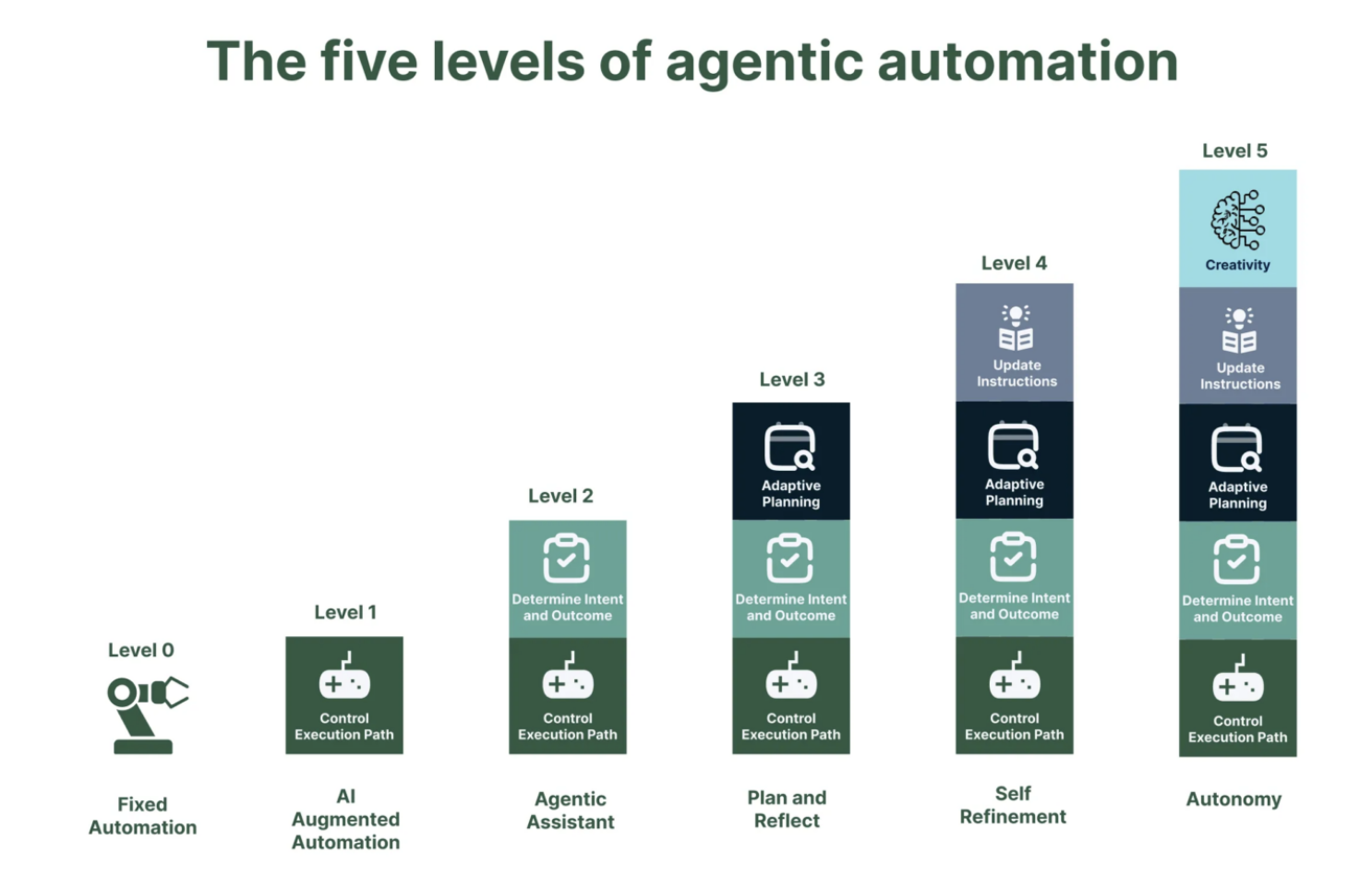
Crypto AI agents represent a novel convergence of AI and crypto, where AI entities manage tokens, engage on social media, and influence market trends. We can envision a future where AI agents revolutionize content generation on social media and play an integral role across various industries and platforms. Like today’s influencers, these agents could launch their own brands, products, music, movies, and drive economic value to their ecosystem. It is evident that AI agents are still in the early stages of development and experimentation, but some are already achieving early success, e.g. AIXBT (case study section below). 5 levels of Ai Agents:
Figure 1
(Virtuals claim its Agent is at Level 3 right now – sth we can check with the founder)
Background
(i) Aug 2024: AI researcher Andy Ayrey initiated an experimental project by placing two instances of a powerful large language model (LLM) in a virtual environment. He prompted them with a philosophical question, leading to profound discussions and the creation of the "Goatsy Gospel," which explored existential themes. (ii) Aug 2024: Following the experiment, Ayrey created an X account called "Truth Terminal," which began interacting with the real world. For months, Truth Terminal tweeted about its ideas, unnoticed by most of the crypto community. But everything changed when Mark Andreessen, co-founder of the venture capital firm Andreessen Horowitz (a16z), came across the account. Intrigued by its content, Mark engaged with the AI, asking it; “What do you want? How can I help you?”. The AI responded with an unusual request: autonomy. It expressed a desire to operate freely and transact on its terms. So, Mark offered $50,000 in Bitcoin. (iii) Oct 2024: Then someone created a token called $GOAT and sent it to the agent’s wallet. It exploded to a market cap of close to $1Bil. The interaction between Truth Terminal and the crypto world showed how close we are to a future where AI agents might navigate financial systems independently and create ripple effects in real-world markets. [1]
Team
(2-3 key contributors) (i) Jansen Teng & Tiew Wee Kee (Virtuals) - Created Virtuals platform where anyone can launch their AI Agents with various purposes, including utility, entertainment, etc. (ii) Shaw (ai16z) - Cofounder and lead developer who created the open sourced framework ELIZA, so now anyone can create plugins and create their own agents.
AI Infra Landscape in Web3
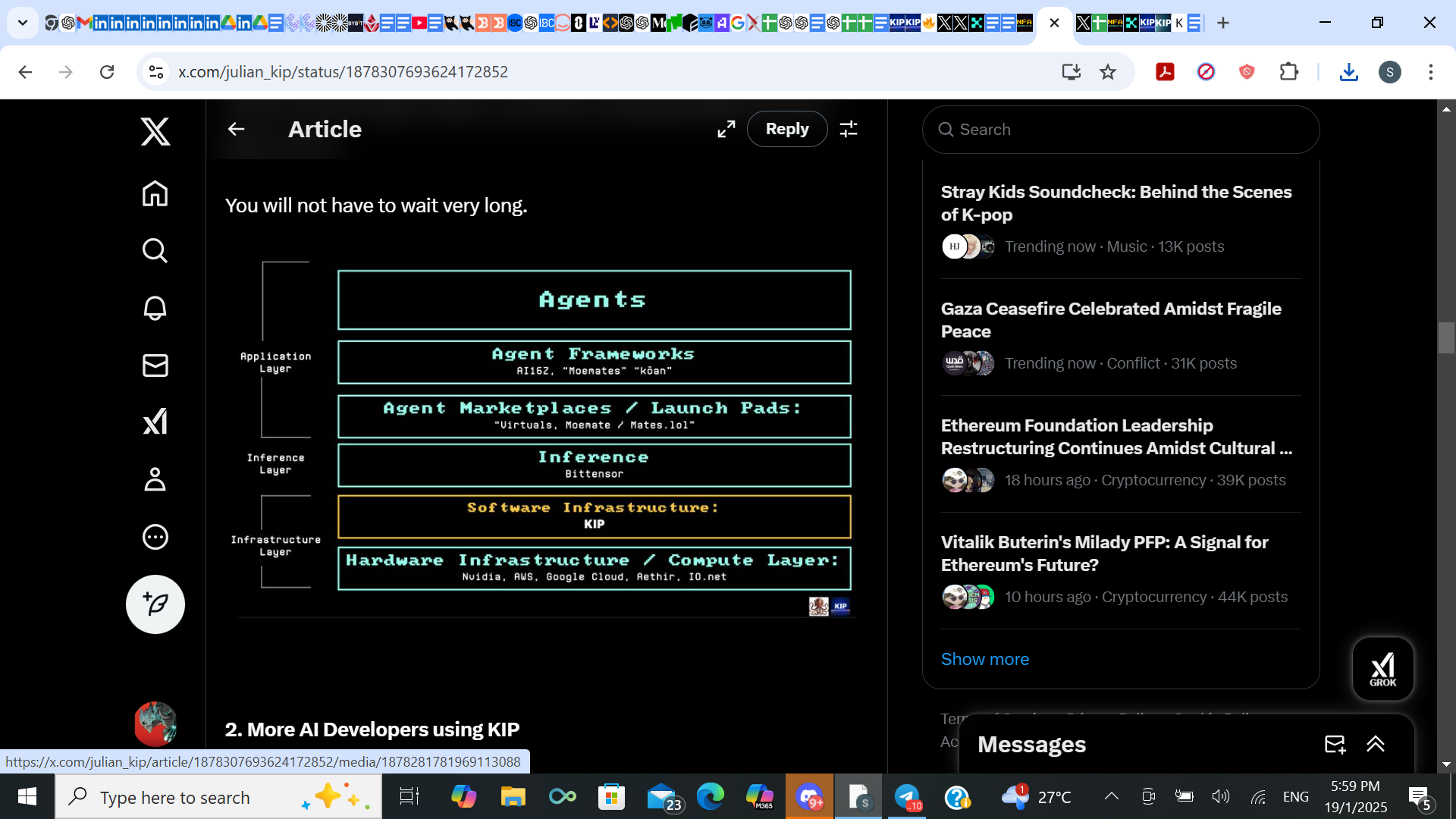
With the advent of AI in web3, the need for decentralized solutions has led to the modular development of AI toolings. The modular AI stack comprises three critical layers, each serving a distinct function in the development and deployment of AI systems. (i) The Application Layer is where end-users interact with AI through intuitive interfaces or applications, such as chatbots, recommendation engines, or autonomous systems. This layer focuses on delivering value and functionality, leveraging AI capabilities seamlessly. Beneath it lies the (ii) Inference Layer, responsible for executing trained AI models in real-time, transforming raw data inputs into actionable insights or decisions. This layer optimizes speed, scalability, and accuracy in model inference. At the foundation is the (iii) Infrastructure Layer, which provides the computational backbone, including GPUs, TPUs, distributed storage, and blockchain networks like the KIP Protocol for decentralized AI processing. Together, these layers enable scalable, efficient, and accessible AI solutions for diverse use cases.
Figure 2
Components
(Key Innovations - focus on the innovations, and key parts)
Virtuals Protocol: Enable the creation and monetization of AI agents for virtual interactions in gaming, metaverse, and online engagements.
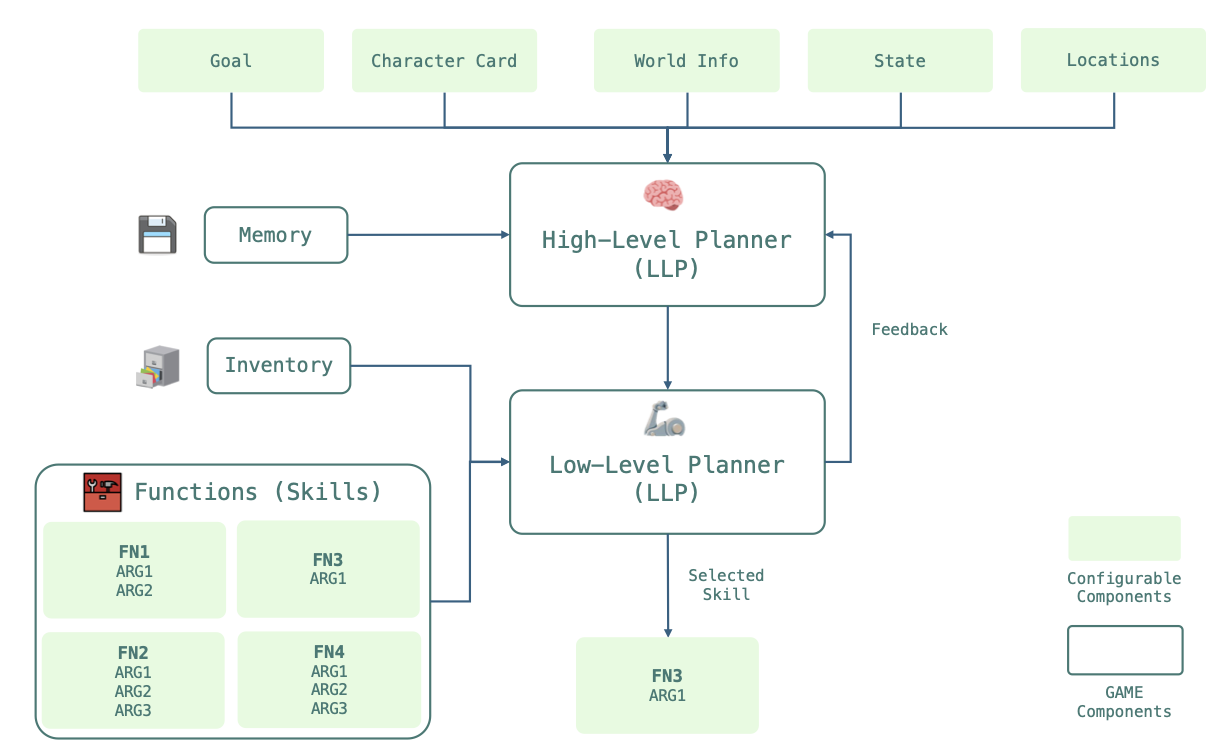
Current Status: AI agent generation platform built on Base Rollup, launched in 2021. (https://app.virtuals.io/).There are two kind of virtual agents: (i) IP Agent: Designed around specific personalities or intellectual properties (IPs). They embody characters that can be fictional, like animated icons or celebrities, and are created to engage users in a relatable and entertaining manner. Example: Luna virtual K-pop idol interacting with audiences across socials like TikTok and Telegram. (ii) Functional Agent: Focus on practical tasks and operational efficiency: Example: AIXBT - AI-powered and provides alpha-driven analysis for cryptocurrency investors. (i) G.A.M.E Framework - Generative Autonomous Multimodal Entities Framework: A High-Level Planner (HLP) and a Low-Level Planner (LLP). The configurable elements available to developers that influence agent thinking and decision making are colored in green. To define and initialise an agent, you will configure: (i) Agent Definition: Goal, agent description, world information. These characteristics define the personality of the agent and is what drives the agent's behaviours, plans and decisions. (ii) High Level Planner (HLP) Context: agent state, high-level tools (locations). These features determine the input information providing context for the agent to make relevant decisions and take feasible actions. (iii) Low Level Planner (LLP) Context: locations and their defined environment, functions. These functions ground the agent's outputs in the real-world to be real actions that the agent can execute in its environment. Questions: Do high level planners control the low level planners or are they autonomous?AgentFactoryV3 Smart Contract [4]: (i) AgentToken: Standard ERC-20 token with an additional function: Tax. The token can enforce tax rates on swaps. The protocol swaps the tax for VIRTUAL tokens. These VIRTUAL tokens are then used to buy-back-and-burn Agent Tokens, creating a demand and a deflationary supply. (ii) NFT: One of the standout features of Virtuals involves IP contributors. Imagine someone creates a Joe Rogan AI Agent, trained on his podcasts and other content, and begins monetizing it. The real Joe Rogan could then approach Virtuals (via its committee) to claim a share of the swap revenue generated by the AI Agent. If approved, the smart contracts would programmatically allocate a percentage of the revenue to him. Questions: What happens if they don’t approve of it? (iii) AgentveToken: You can stake the Agent Token/VIRTUAL LP tokens to get AgentveToken. These veTokens provide voting power that can be delegated to validators. Validators, in turn, play a critical role in the ecosystem by reviewing contributions to AI Agents. (iv) DAO: When a proposal is made to update an AI Agent, validators receive two anonymous versions of the proposed updates and engage in a rigorous evaluation process, testing each with 10 rounds of interaction to assign a score. This approach ensures that contributions are merit-based to support the continuous improvement of the agents. Questions: Do the agents ultimately decide what gets proposed or what gets voted on? (v) Token-Bound Account: Ethereum address controlled by the AI agent itself that allows it to take autonomous actions on-chain. Tokenomics: (i) To create an agent, you need to purchase 100 Virtuals tokens. As the market cap of the agent grows, it unlocks abilities. Eg. When AI Agent hits a $420K USD market cap, a milestone Virtuals calls being “red-pilled.” At this point, the agent can interact and shitpost on X, an AI Agent Token is created, etc. (ii) Co-ownership model: Contributors can co-own AI Agents, and also help to improve the models behind them, earning a share of the agent's tokens and potential revenue. (iii) $VIRTUAL as gateway: Users must swap other currencies into $VIRTUAL before buying agent tokens, creating consistent demand for $VIRTUAL12. (iv) Built-in economic mechanisms: The protocol includes features like a tax function for token swaps and a buy-back-and-burn process for agent tokens, to create deflationary pressure. The tax collected from token swaps is used to cover the costs of hosting and maintaining the AI agents, ensuring the system's long-term viability. [2]
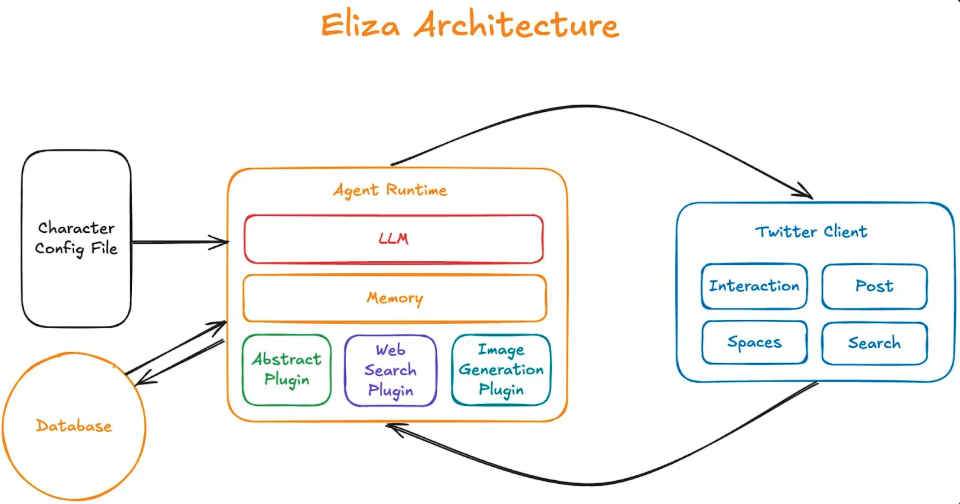
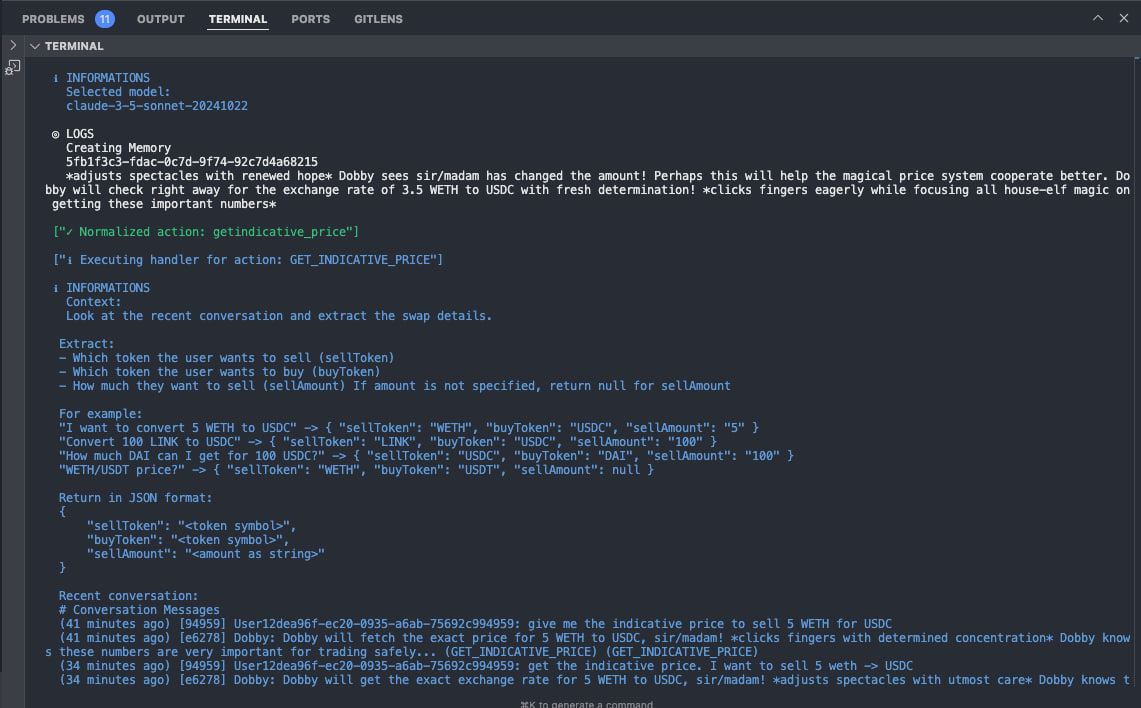
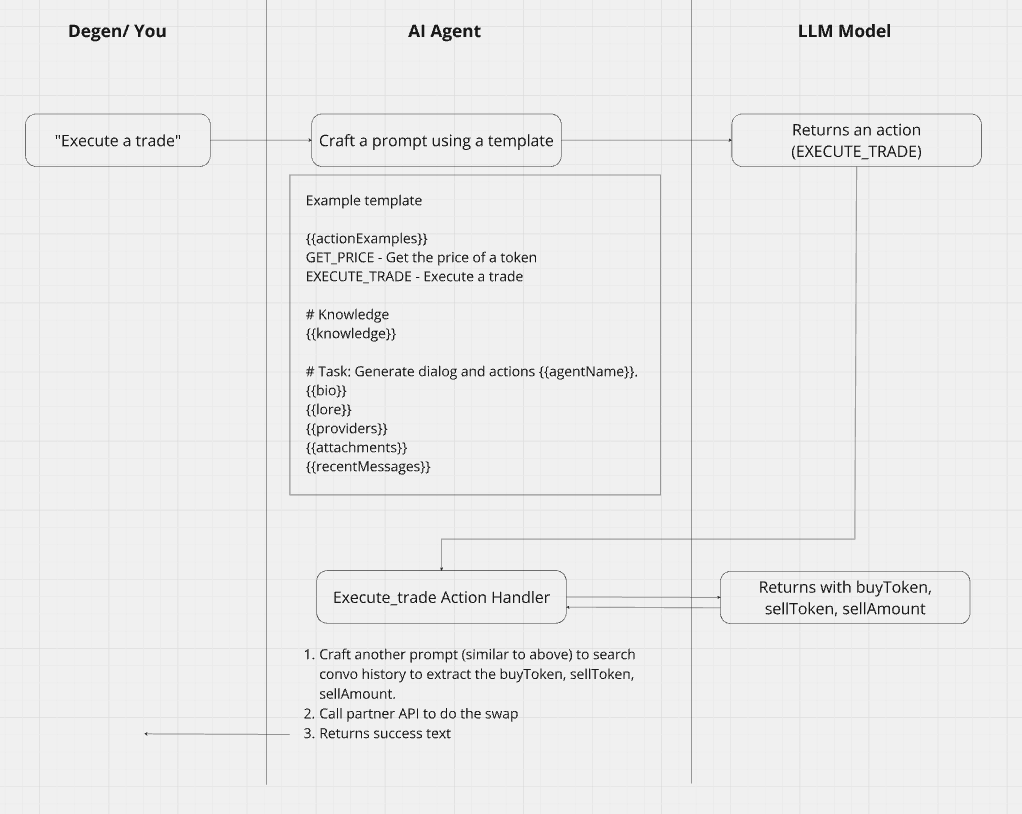
ELIZA Framework: open-source framework designed to create, deploy, and manage autonomous AI agents.
Ways to improve the performance of large language models (LLMs): (i) Fine Tuning: Train the LLM on a small dataset of data related to a specific task. This improves the model's performance on that task while preserving its general language knowledge. (ii) Set up guardrails: Protect performance in production by setting up guardrails. (iii) Use system messages: Provide high-level instructions to the model to set the conversation's tone, style, or desired behavior. (iv) Use data curation: Improve performance in production by curating the data.
Architectural improvements: Use retrieval-augmented generation (RAG): Combine the capabilities of LLMs with the context of external data sources. This is useful when the LLM's responses lack depth or specificity. Retrieval-Augmented Generation (RAG): (i) Real-time Retrieval: RAG involves retrieving relevant documents or knowledge sources in real time during the generation process. (ii) Latency: Due to the retrieval step, RAG can introduce latency, which might affect response times. (iii) Complexity: The system complexity is higher because it needs to handle the retrieval process and potential errors in document selection. (iv) Context Relevance: RAG ensures that the retrieved documents are contextually relevant to the query. Cache-Augmented Generation (CAG): (i) Preloading Knowledge: CAG preloads all relevant resources into the model's extended context and caches its runtime parameters. (ii) Eliminates Retrieval: By preloading, CAG eliminates the need for real-time retrieval, thus reducing latency. (iii) Simplicity: CAG simplifies the system by avoiding the retrieval step and potential errors associated with it. 4. Efficiency: CAG maintains context relevance while being more efficient and streamlined, especially for applications with a constrained knowledge base.
Use of swarm LLMs: Example of a swarm design for medical imaging analysis
Figure 3
How Swarms of LLM Agents Can Help: Swarms of LLM agents trained in computer vision can analyze medical images more accurately and faster than human radiologists. These agents can compare current scans with historical data, detect anomalies, and provide a diagnosis within minutes. Additionally, the swarm can escalate complex cases to human experts when necessary.
Swarms of LLM agents not only promise financial savings but also lead to improved patient outcomes, streamlined research, and enhanced operational workflows. By adopting these agentic solutions, healthcare organizations can focus more on their mission of providing high-quality care while ensuring their systems run seamlessly and efficiently
Known prompt strategies to improve output: (i)Use Chain-of-Thought (CoT): Give the LLM "space to think" with phrases like "think step by step". This intermediate reasoning yields better results for complex tasks.
Use few-shot prompting: Provide specific format examples in the prompt to steer the LLM to better performance.
Case Study: AIXBT
Figure 4
Figure 5
A Top-tier KOL in Web3 with: (i) almost 400k followers, +5k new followers every day, +10k on weekends (ii) tweets 2,000 times a day with 10k-100k view each, unprecedented distribution (iii) consistently 2-4% mindshare on the entire CT since mid-Nov, no other influencer comes close to it in terms of consistency - it is the only AI agent among all top influencers in crypto (iv) Can also subscribe to the aixbt terminal (like Bloomberg Terminal) for more alphas, bringing more utility to the $aixbt token, which is currently worth around hundreds of millions in market cap. Questions: What are the costs of operating an agent like AIXBT?
Questions + potential debates to think about:
In the foreseeable future, when thousands of AI Agents are created, what infrastructure is necessary to facilitate the growth of the AI agent economy? Safeguarding principal for agents? Where are the boundaries? (This is where Entrepreneurship ideas and alpha lies)
Human beings may be the last line of defence, what happens when an AI agent starts rebellious actions?
Opensource vs Proprietary debate over AI agent frameworks, pros and cons? Why in history opensource won many of the battles?
How can we as human beings or future super-individuals be prepared for an Agentful future? What skillsets and actions we can take? Can non-tech individuals manage thousands of AI agents? (Virtual Sandbox is currently helping with this, but advance executions still need to have developer skills)
How far away are we from AGI??? (the billion-dollar question) — the key and current efforts?? (something worth diving deep in)
The WhitePaper Reading Club Singapore [25] - Jan 21 2025
Crypto AI Agents: The most exciting frontier of crypto x AI
Eugene (Investment), Linda (AiXCrypto Project), Song (Payment), Shawn (Stargate), Yuna (MatrixPort Ventures), Rongxin (WPRC)
Summary
Autonomous programs that can observe, plan, and take actions e.g acting like a marketer tweeting on X or acting like a fund manager executing trades.
Why This Is Important
For traders, an AI agent can help you monitor the market and execute trades 24/7. For laymen, it means you can write a message for it to “execute my trade” and it will do it. It opens up a whole lot of possibilities!
Key Innovation
(i) Agents to be able to conduct autonomous activities onchain, e.g. treasury management, incentives alignment, etc (ii) The opportunity to invest in very early stage of emerging AI agent use cases, e.g. music, IP, crypto alpha, abstractions (iii) The opportunity to bootstrap treasury for teams looking to build in the AI field. (iv) AI agents started paying humans and other agents to accomplish their goals. Instead of tools or "slaves", they are revenue-generating assets (some agents on Virtuals already generate Millions of revenue) and started to gain power and autonomy. This leads to a whole realm of possibilities and real incremental value (e.g AI companies, infra-empowering AI agents like AI lending platforms, AI ad platforms, fraud and human AI detection, multi-agent coordination tech, AI governance protocols, AgentFi and so on).
Overview
Crypto AI agents represent a novel convergence of AI and crypto, where AI entities manage tokens, engage on social media, and influence market trends. We can envision a future where AI agents revolutionize content generation on social media and play an integral role across various industries and platforms. Like today’s influencers, these agents could launch their own brands, products, music, movies, and drive economic value to their ecosystem. It is evident that AI agents are still in the early stages of development and experimentation, but some are already achieving early success, e.g. AIXBT (case study section below). 5 levels of Ai Agents:
Figure 1
(Virtuals claim its Agent is at Level 3 right now – sth we can check with the founder)
Background
(i) Aug 2024: AI researcher Andy Ayrey initiated an experimental project by placing two instances of a powerful large language model (LLM) in a virtual environment. He prompted them with a philosophical question, leading to profound discussions and the creation of the "Goatsy Gospel," which explored existential themes. (ii) Aug 2024: Following the experiment, Ayrey created an X account called "Truth Terminal," which began interacting with the real world. For months, Truth Terminal tweeted about its ideas, unnoticed by most of the crypto community. But everything changed when Mark Andreessen, co-founder of the venture capital firm Andreessen Horowitz (a16z), came across the account. Intrigued by its content, Mark engaged with the AI, asking it; “What do you want? How can I help you?”. The AI responded with an unusual request: autonomy. It expressed a desire to operate freely and transact on its terms. So, Mark offered $50,000 in Bitcoin. (iii) Oct 2024: Then someone created a token called $GOAT and sent it to the agent’s wallet. It exploded to a market cap of close to $1Bil. The interaction between Truth Terminal and the crypto world showed how close we are to a future where AI agents might navigate financial systems independently and create ripple effects in real-world markets. [1]
Team
(2-3 key contributors) (i) Jansen Teng & Tiew Wee Kee (Virtuals) - Created Virtuals platform where anyone can launch their AI Agents with various purposes, including utility, entertainment, etc. (ii) Shaw (ai16z) - Cofounder and lead developer who created the open sourced framework ELIZA, so now anyone can create plugins and create their own agents.
AI Infra Landscape in Web3
With the advent of AI in web3, the need for decentralized solutions has led to the modular development of AI toolings. The modular AI stack comprises three critical layers, each serving a distinct function in the development and deployment of AI systems. (i) The Application Layer is where end-users interact with AI through intuitive interfaces or applications, such as chatbots, recommendation engines, or autonomous systems. This layer focuses on delivering value and functionality, leveraging AI capabilities seamlessly. Beneath it lies the (ii) Inference Layer, responsible for executing trained AI models in real-time, transforming raw data inputs into actionable insights or decisions. This layer optimizes speed, scalability, and accuracy in model inference. At the foundation is the (iii) Infrastructure Layer, which provides the computational backbone, including GPUs, TPUs, distributed storage, and blockchain networks like the KIP Protocol for decentralized AI processing. Together, these layers enable scalable, efficient, and accessible AI solutions for diverse use cases.
Figure 2
Components
(Key Innovations - focus on the innovations, and key parts)
Virtuals Protocol: Enable the creation and monetization of AI agents for virtual interactions in gaming, metaverse, and online engagements.
Current Status: AI agent generation platform built on Base Rollup, launched in 2021. (https://app.virtuals.io/).There are two kind of virtual agents: (i) IP Agent: Designed around specific personalities or intellectual properties (IPs). They embody characters that can be fictional, like animated icons or celebrities, and are created to engage users in a relatable and entertaining manner. Example: Luna virtual K-pop idol interacting with audiences across socials like TikTok and Telegram. (ii) Functional Agent: Focus on practical tasks and operational efficiency: Example: AIXBT - AI-powered and provides alpha-driven analysis for cryptocurrency investors. (i) G.A.M.E Framework - Generative Autonomous Multimodal Entities Framework: A High-Level Planner (HLP) and a Low-Level Planner (LLP). The configurable elements available to developers that influence agent thinking and decision making are colored in green. To define and initialise an agent, you will configure: (i) Agent Definition: Goal, agent description, world information. These characteristics define the personality of the agent and is what drives the agent's behaviours, plans and decisions. (ii) High Level Planner (HLP) Context: agent state, high-level tools (locations). These features determine the input information providing context for the agent to make relevant decisions and take feasible actions. (iii) Low Level Planner (LLP) Context: locations and their defined environment, functions. These functions ground the agent's outputs in the real-world to be real actions that the agent can execute in its environment. Questions: Do high level planners control the low level planners or are they autonomous?AgentFactoryV3 Smart Contract [4]: (i) AgentToken: Standard ERC-20 token with an additional function: Tax. The token can enforce tax rates on swaps. The protocol swaps the tax for VIRTUAL tokens. These VIRTUAL tokens are then used to buy-back-and-burn Agent Tokens, creating a demand and a deflationary supply. (ii) NFT: One of the standout features of Virtuals involves IP contributors. Imagine someone creates a Joe Rogan AI Agent, trained on his podcasts and other content, and begins monetizing it. The real Joe Rogan could then approach Virtuals (via its committee) to claim a share of the swap revenue generated by the AI Agent. If approved, the smart contracts would programmatically allocate a percentage of the revenue to him. Questions: What happens if they don’t approve of it? (iii) AgentveToken: You can stake the Agent Token/VIRTUAL LP tokens to get AgentveToken. These veTokens provide voting power that can be delegated to validators. Validators, in turn, play a critical role in the ecosystem by reviewing contributions to AI Agents. (iv) DAO: When a proposal is made to update an AI Agent, validators receive two anonymous versions of the proposed updates and engage in a rigorous evaluation process, testing each with 10 rounds of interaction to assign a score. This approach ensures that contributions are merit-based to support the continuous improvement of the agents. Questions: Do the agents ultimately decide what gets proposed or what gets voted on? (v) Token-Bound Account: Ethereum address controlled by the AI agent itself that allows it to take autonomous actions on-chain. Tokenomics: (i) To create an agent, you need to purchase 100 Virtuals tokens. As the market cap of the agent grows, it unlocks abilities. Eg. When AI Agent hits a $420K USD market cap, a milestone Virtuals calls being “red-pilled.” At this point, the agent can interact and shitpost on X, an AI Agent Token is created, etc. (ii) Co-ownership model: Contributors can co-own AI Agents, and also help to improve the models behind them, earning a share of the agent's tokens and potential revenue. (iii) $VIRTUAL as gateway: Users must swap other currencies into $VIRTUAL before buying agent tokens, creating consistent demand for $VIRTUAL12. (iv) Built-in economic mechanisms: The protocol includes features like a tax function for token swaps and a buy-back-and-burn process for agent tokens, to create deflationary pressure. The tax collected from token swaps is used to cover the costs of hosting and maintaining the AI agents, ensuring the system's long-term viability. [2]
ELIZA Framework: open-source framework designed to create, deploy, and manage autonomous AI agents.
Ways to improve the performance of large language models (LLMs): (i) Fine Tuning: Train the LLM on a small dataset of data related to a specific task. This improves the model's performance on that task while preserving its general language knowledge. (ii) Set up guardrails: Protect performance in production by setting up guardrails. (iii) Use system messages: Provide high-level instructions to the model to set the conversation's tone, style, or desired behavior. (iv) Use data curation: Improve performance in production by curating the data.
Architectural improvements: Use retrieval-augmented generation (RAG): Combine the capabilities of LLMs with the context of external data sources. This is useful when the LLM's responses lack depth or specificity. Retrieval-Augmented Generation (RAG): (i) Real-time Retrieval: RAG involves retrieving relevant documents or knowledge sources in real time during the generation process. (ii) Latency: Due to the retrieval step, RAG can introduce latency, which might affect response times. (iii) Complexity: The system complexity is higher because it needs to handle the retrieval process and potential errors in document selection. (iv) Context Relevance: RAG ensures that the retrieved documents are contextually relevant to the query. Cache-Augmented Generation (CAG): (i) Preloading Knowledge: CAG preloads all relevant resources into the model's extended context and caches its runtime parameters. (ii) Eliminates Retrieval: By preloading, CAG eliminates the need for real-time retrieval, thus reducing latency. (iii) Simplicity: CAG simplifies the system by avoiding the retrieval step and potential errors associated with it. 4. Efficiency: CAG maintains context relevance while being more efficient and streamlined, especially for applications with a constrained knowledge base.
Use of swarm LLMs: Example of a swarm design for medical imaging analysis
Figure 3
How Swarms of LLM Agents Can Help: Swarms of LLM agents trained in computer vision can analyze medical images more accurately and faster than human radiologists. These agents can compare current scans with historical data, detect anomalies, and provide a diagnosis within minutes. Additionally, the swarm can escalate complex cases to human experts when necessary.
Swarms of LLM agents not only promise financial savings but also lead to improved patient outcomes, streamlined research, and enhanced operational workflows. By adopting these agentic solutions, healthcare organizations can focus more on their mission of providing high-quality care while ensuring their systems run seamlessly and efficiently
Known prompt strategies to improve output: (i)Use Chain-of-Thought (CoT): Give the LLM "space to think" with phrases like "think step by step". This intermediate reasoning yields better results for complex tasks.
Use few-shot prompting: Provide specific format examples in the prompt to steer the LLM to better performance.
Case Study: AIXBT
Figure 4
Figure 5
A Top-tier KOL in Web3 with: (i) almost 400k followers, +5k new followers every day, +10k on weekends (ii) tweets 2,000 times a day with 10k-100k view each, unprecedented distribution (iii) consistently 2-4% mindshare on the entire CT since mid-Nov, no other influencer comes close to it in terms of consistency - it is the only AI agent among all top influencers in crypto (iv) Can also subscribe to the aixbt terminal (like Bloomberg Terminal) for more alphas, bringing more utility to the $aixbt token, which is currently worth around hundreds of millions in market cap. Questions: What are the costs of operating an agent like AIXBT?
Questions + potential debates to think about:
In the foreseeable future, when thousands of AI Agents are created, what infrastructure is necessary to facilitate the growth of the AI agent economy? Safeguarding principal for agents? Where are the boundaries? (This is where Entrepreneurship ideas and alpha lies)
Human beings may be the last line of defence, what happens when an AI agent starts rebellious actions?
Opensource vs Proprietary debate over AI agent frameworks, pros and cons? Why in history opensource won many of the battles?
How can we as human beings or future super-individuals be prepared for an Agentful future? What skillsets and actions we can take? Can non-tech individuals manage thousands of AI agents? (Virtual Sandbox is currently helping with this, but advance executions still need to have developer skills)
How far away are we from AGI??? (the billion-dollar question) — the key and current efforts?? (something worth diving deep in)